An observation tool to explore how the system processes the experiences it encounters.
Kinesiology developed from the 1960s onwards, notably through the work of chiropractors who began using muscle testing as a tool for observing function. Despite the similarity in terminology, it should not be confused with physiotherapy: they are different practices.
Kinesiology uses muscle testing, among other techniques, to gather information on how the system reacts to its experiences. This helps guide the investigation, identify what warrants attention, and then select the most relevant regulatory interventions.
Understanding kinesiology
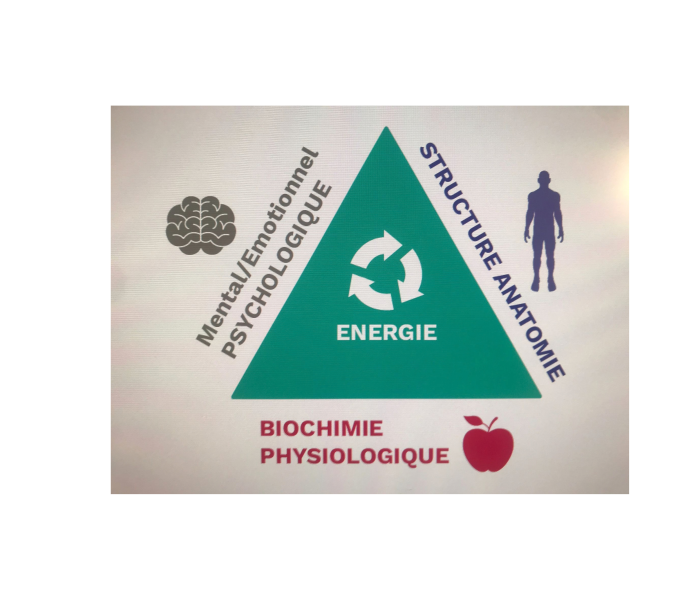
Kinesiology observes human functioning through three interdependent dimensions: psychological, physiological, and structural. The health triangle represents this balance and the flow between these dimensions.
Muscle testing allows for a progressive increase in the resolution of the investigation. Muscles then become functional coordinates: they help to pinpoint where the system encounters a difficulty and to identify what needs to be addressed.
Based on this information, regulation aims to allow the system to experience a different response in a condition that previously caused it difficulty.
Kinesiology FAQ
What you can observe on a daily basis
Make an appointment• You understand certain situations but are unable to transform them.
• You repeat reactions that you would like to change.
• You feel that certain situations automatically trigger the same responses.
• You feel a gap between what you want and what you are able to achieve.
• You are looking to better understand how you function.
• You want to develop more coherence between what you think, feel and experience.
Kinesiology offers a way to observe these mechanisms in order to support the system's natural capacity for adaptation.
The body does not tell a story. It provides information on how the system functions in response to that story.

How does a team or organization function?
Read more

Why focus on how it works rather than just the difficulty?
Read more

Cellular memory and epigenetics: what are the links?
Read more
Munz Floor® – the new method for rejuvenation, flexibility and relaxation
Read more
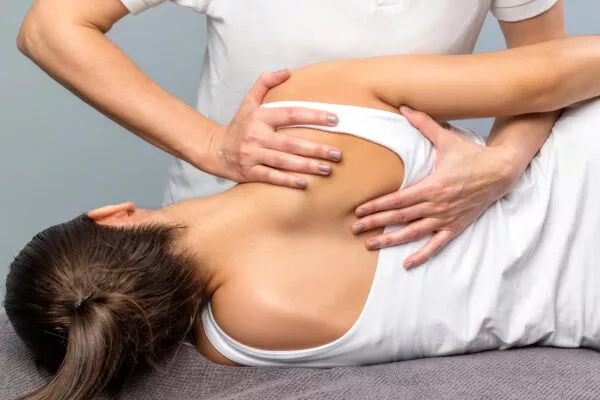
Difference between a chiropractor, an osteopath, and a kinesiologist
Read more

Complementary therapy and allopathic medicine: a necessary marriage
Read more

Why the modules are complementary
Read more

A tailored approach
Read more

The leaders
Read more

Spiritual Response Therapy
Read more

Health through Touch
Read more

Why I use the MUNZ FLOOR® in my approach
Read more
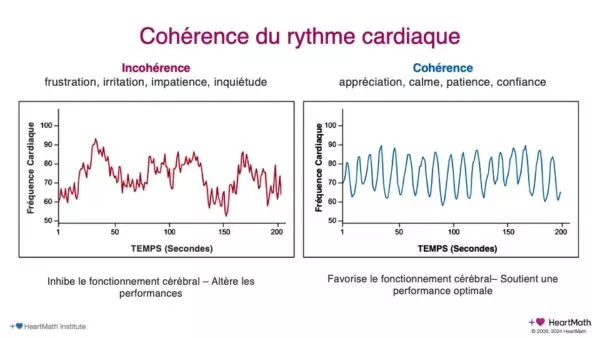
Why I use heart coherence in my approach
Read more
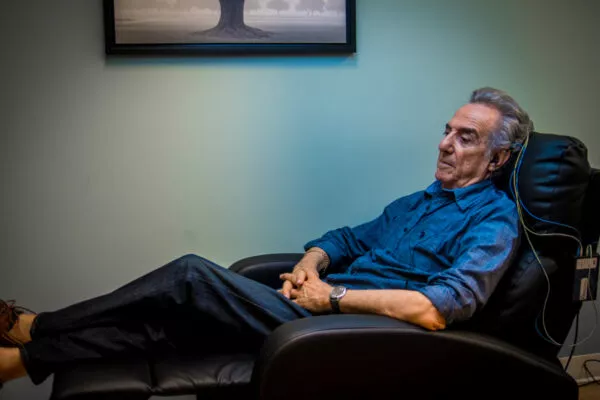
Why I use dynamic neurofeedback in my approach
Read more