Muscle testing: a bridge between body, mind and subconscious
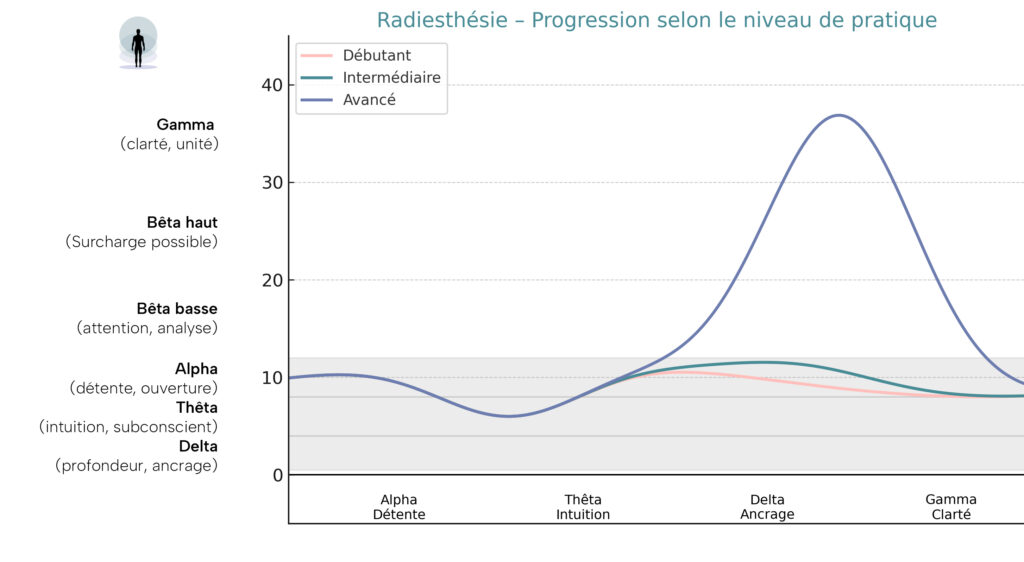
The brain functions like a radio station: depending on the frequency at which it vibrates, our state of consciousness changes.
Normally, our rational thought operates in the beta band, around 15 Hz: this is the domain of logic, analysis, and decision-making. But certain practices, such as hypnosis, meditation, or muscle testing, can cause the brain to shift to other frequencies
- Alpha (8–12 Hz): relaxation, creativity, imagination.
- Theta (4–8 Hz): access to the subconscious, deep memories and emotions.
- Delta (0.5–4 Hz): unconscious, regeneration, deep sleep.
- Gamma (30–40 Hz and +): hyper-clarity, integrated intuition.
During a muscle test, the brain sometimes experiences a sudden change in electrical frequency. Normally, our logical thinking operates in the beta band (around 15 Hz), the area associated with reasoning and decision-making. But under the influence of this test, the brain may shift towards alpha or theta frequencies, without necessarily reaching the depths of hypnosis.
Cognitive confusion: a necessary step
For someone unaccustomed to it, this transition can create mental fog: difficulty organizing thoughts, a feeling of floating, a loss of bearings. The rational mind must let go for a few moments so that the body can take over.
This passage is reminiscent of the hypnosis experience, where one voluntarily enters altered states of consciousness. The difference is that, thanks to muscle testing, the body becomes the guide, creating a direct link between the conscious and subconscious mind.
The goal of the work I offer is to allow each person to access their inner self, their intuitions, and their essence, while maintaining cognitive clarity: uniting the left and right hemispheres so that intuition and rationality can function together, naturally and fluidly, and in the unfolding of our full potential
Learning to navigate between frequencies
With experience, we learn to remain clear-headed cognitively while maintaining access to our deeper selves. It's a form of dual consciousness: we can think and decide while remaining connected to our inner being. Like a dancer who keeps the rhythm while letting the music flow through them, this fluidity is acquired gradually with practice.
After a session: a new posture
Many people describe, after a session, a sensation similar to that felt after osteopathy: greater alignment, fluidity, and lightness. The body and mind regain a natural coherence, as if a veil had been lifted.
These frequency changes don't just produce fluidity and clarity. Like after an osteopathic session, where the entire posture is realigned, there may be an adjustment period. For the first few hours or days, you might experience fatigue, aches, confusion, or temporary discomfort. This isn't a failure, but rather a sign that the body and mind are seeking a new balance. Once this phase has passed, a lasting sense of alignment, lightness, and coherence takes hold.